
If you’ve been hanging around rental property forums or reading up on real estate, you’ve probably seen the term CapEx or CapX (short for Capital Expenditures). For a beginner, it sounds like technical jargon, but the concept is actually pretty straightforward once you peel back the layers.
In the world of landlording, CapEx refers to the big-ticket, infrequent expenses that actually add value to your property or extend its lifespan. We aren't talking about fixing a leaky faucet or mowing the lawn; we’re talking about the heavy hitters that keep the building standing and functional for the long haul.
If routine maintenance is the oil change for your car, CapEx is the brand-new transmission. Understanding the difference will help you manage your cash flow without getting blindsided by a massive bill.
What Counts as CapEx?
You won’t see CapEx on your monthly to-do list. These are major projects involving the property's core components that eventually wear out and require a total overhaul or a significant upgrade.
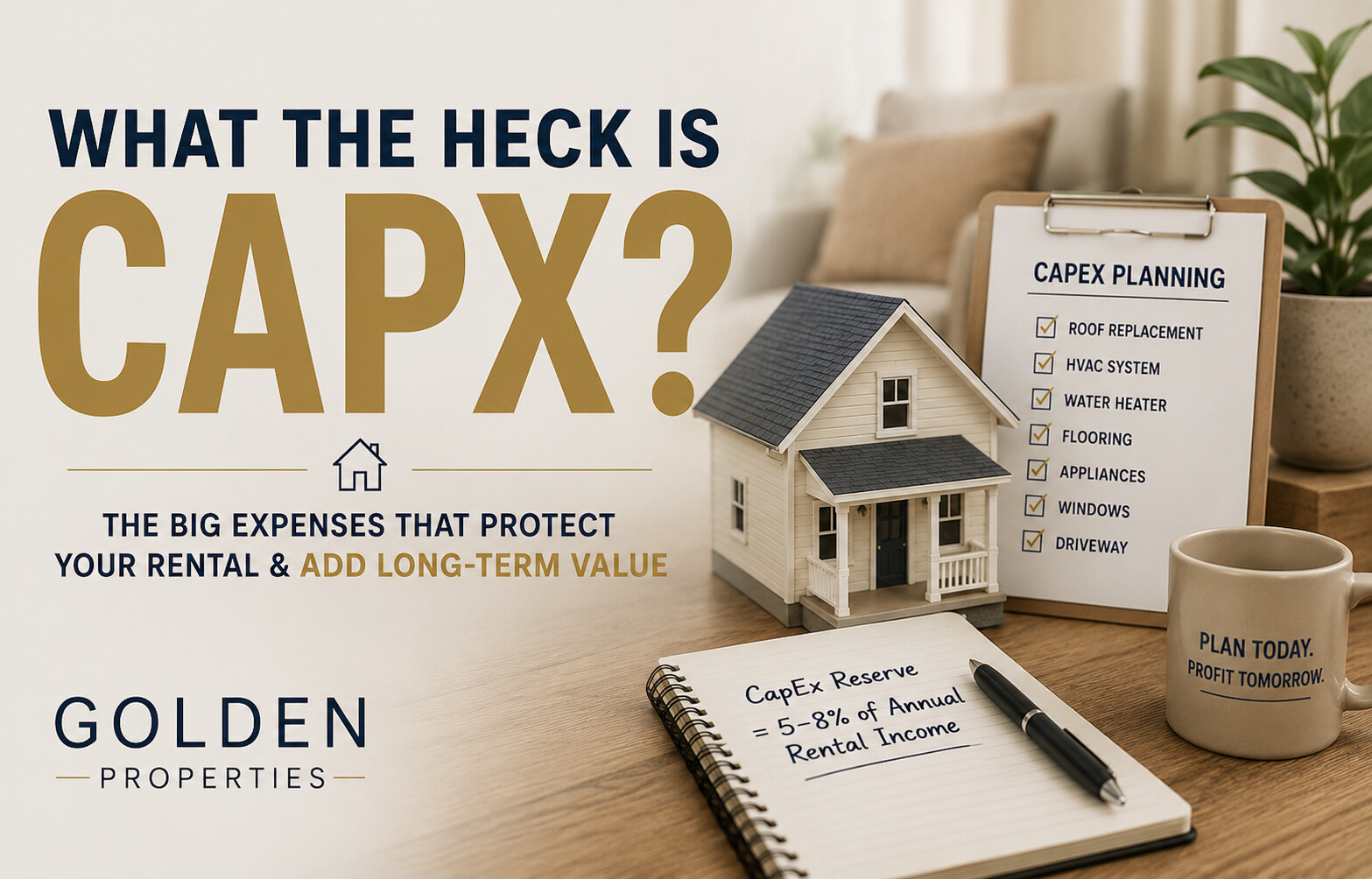
Some common examples include:
Roof replacement
HVAC system replacement
Water heater replacement
New flooring or carpet
Exterior paint or siding
Appliance replacement
Window replacement
Driveway replacement
These items typically last anywhere from 10 to 30 years, depending on the material and usage. Because of their cost and lifespan, they are usually planned for well in advance rather than treated as normal operating expenses.
CapEx vs. Maintenance
The easiest way to wrap your head around CapEx is to put it side-by-side with your standard maintenance. While they both involve spending money on the property, their scale and frequency are completely different.
Maintenance is your day-to-day defense. These are the small, annoying, recurring tasks that keep the property habitable and prevent things from breaking down further.
CapEx, on the other hand, is the big-picture offense. These are the massive replacements that effectively "reset the clock" on a major part of your building.
Here are a few examples:
Maintenance
Fixing a leaking faucet
Servicing an HVAC system
Repairing drywall
Repairing a broken appliance
CapEx
Replacing the HVAC system
Installing new flooring
Replacing a roof
Purchasing new appliances
In simple terms, maintenance keeps the property running today, while CapEx keeps the property functioning for the next 10–20 years.
Why Investors Budget for CapEx
One of the most common mistakes new landlords make is forgetting to plan for these larger expenses. A roof, water heater, or HVAC system will eventually need replacement. If those costs are not anticipated, they can create significant financial strain.
Many experienced investors set aside 5–8% of annual rental income for CapEx reserves.
For example, if your monthly rent is $2,800, then our annual rental income is $33,600. A CapEx reserve of 5–8% would equal approximately $1,700 – $2,700 per year.
Over time, those reserves can help cover major replacements without disrupting the financial stability of the investment.
Final Thoughts
CapEx might sound like a dense term from a finance textbook, but it’s actually a pretty simple concept. At the end of the day, it’s just about making sure you have the funds ready for the big, inevitable investments that keep a property standing.
Distinguishing between a $100 repair and a $10,000 replacement (and budgeting for both) helps rental property owners operate their investments more like a business and less like a series of unexpected expenses.
At Golden Properties, we help owners across Coeur d’Alene and North Idaho map out these long-term costs so their investments stay profitable and well-maintained. If you’re looking for a hand evaluating your property's performance or planning for the years ahead, we’re here to help.